A Practical Guide to Choosing, Packing and Using a Haversack
A haversack is a simple piece of equipment, but it can carry a surprising amount of useful gear. Additionally, over the years, I have used small shoulder bags for hiking, hunting, camping and spending time in the woods. Moreover, what I like most about the haversack is its simplicity. In addition, it carries the things I need without encouraging me to carry everything I own.
The purpose of this guide is to explain what a haversack is, where it came from, how to choose one, what materials to look for, and how I set mine up for different types of trips.
What Is a Haversack?
A haversack is, in practice, a simple shoulder bag designed to carry personal equipment, food, rations and other necessities.
In fact, the word haversack comes from the German Hafersack, meaning a sack for oats. In essence, the original idea was simple: a bag for carrying provisions. Over time the haversack became common military equipment and was also used by travelers, workers, hunters and outdoors-men.
Unlike a backpack, a haversack normally hangs from one shoulder and rests against the opposite side of the body. Thus, it usually consists of one large compartment with a flap over the top and a single adjustable shoulder strap.
The design has changed very little because it works.
Additionally, a good haversack is simple, durable and easy to get into. Furthermore, there are no complicated suspension systems, frames or dozens of pockets. However, it is simply a bag for carrying the equipment you need.
A Short History
Haversacks have been around for a very long time, but they became particularly well known through military use.
Furthermore, soldiers needed a practical way to carry food and personal necessities without filling their knapsack. Additionally, many military haversacks were made of canvas and slung over the shoulder.
During the American Civil War, both Union and Confederate soldiers used haversacks for carrying rations. Thus, the basic design was very simple: a rectangular cloth bag with a flap and shoulder strap.
The haversack continued to be used by military and civilians because it was inexpensive, easy to manufacture and easy to repair.
Moreover, the haversack has found a new use for the modern outdoorsman. As a result, it serves well as a day bag for bushcraft, hiking, hunting, fishing and general outdoor activities.
In fact, the modern haversack is not necessarily a reproduction of a military bag. Some are made from traditional canvas and oilcloth, while others are made from modern synthetic materials.
Nevertheless, the basic idea remains the same.
Carry what you need.
Keep it simple.
Choosing a Haversack
Similarly, there are many haversacks available today, from inexpensive surplus pouches to handmade leather and canvas bags.
First, consider what you intend to use it for.
For shorter outings, a small bag may be perfect for a short walk or a few hours in the woods. Thus, a larger bag will be better for hunting, bushcraft or an overnight trip. You can get some ideas at https://www.scrambleroutdoors.com/oil-cloth-canvas-haversack/ and at https://www.scrambleroutdoors.com/the-haversack-kit/.
I would look for the following characteristics:
Size
A useful general-purpose haversack should be large enough to carry your basic equipment without becoming so large that you start filling it with unnecessary gear.
Consequently, a bag about 10″ by 12″ can function well as a day bag.
Additionally, a larger bag—about 12 by 14 or 14 by 16 inches—offers more capacity for hunting gear.
Shoulder Strap
Additionally, the shoulder strap should be wide enough to carry the load comfortably.
An adjustable strap is preferable because it allows the bag to be worn at different heights.
A shoulder pad can also be useful when carrying a heavier load.
Flap
The flap should provide good protection from rain and dirt.
A longer flap is especially useful with traditional canvas and oilcloth bags.
Pockets
I prefer simplicity.
One large main compartment and perhaps one small inside pocket are usually enough.
Too many pockets can make a haversack unnecessarily complicated and make it harder to remember where everything is.
Construction
Look at the stitching, seams, strap attachments and hardware.
These areas receive the most stress.
A haversack can be made from excellent material and still fail if the stitching is poor.
Materials
Traditional haversacks were generally made from natural materials.
Canvas
Canvas is probably the most traditional choice.
It is strong, relatively inexpensive and easy to repair.
Heavy canvas can withstand a great deal of abuse and becomes softer and more comfortable with use.
Oilcloth
Oilcloth is canvas or another fabric treated to make it more resistant to water.
It is particularly useful for an outdoor haversack because the treatment provides additional protection against rain and damp conditions.
Oilcloth also has the traditional appearance that many people associate with old-time outdoor equipment.
Leather
Leather makes a very durable haversack and can last for decades when properly maintained.
The disadvantage is weight.
A leather bag can become quite heavy before you put anything inside it.
Modern Synthetic Materials
Modern fabrics such as nylon and polyester can make excellent haversacks.
They are generally lighter and dry faster than canvas.
The disadvantage is that they do not have quite the same traditional character as canvas, oilcloth or leather.
For my purposes, I prefer a combination of traditional materials with practical construction.
My Haversack
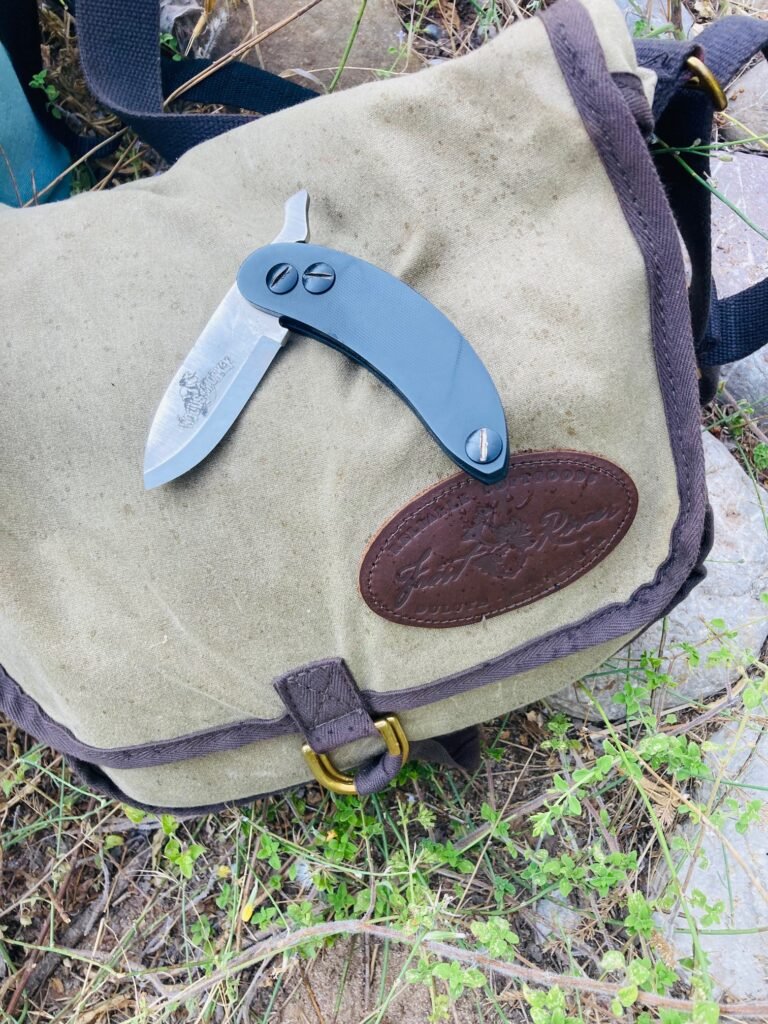
My current haversack is made from 10.10oz waxed canvas and measures approximately 12′.5”H x 11”W X 2.5”D.
It is large enough for a useful day load without becoming a small backpack.It’s capacity is 5.6lt. It has a large main compartment, and an adjustable shoulder strap.This size gives me enough room for water, food, fire-starting equipment, shelter material, first aid and several useful tools.
I don’t try to fill the bag.
The haversack is only one part of my outdoor system. Some equipment, particularly a knife and other frequently used tools, can be carried on my belt rather than taking up space inside the bag.
The contents also change depending on the trip.
What I Carry
There isn’t one perfect haversack load.
The contents should change according to the weather, season, location and length of the trip.
I generally think of my equipment in terms of the basic 5 Cs:
Cutting Tool
Cover
Combustion
Container
Cordage
These five categories provide a good foundation for building a practical outdoor kit.
Day Trip Load
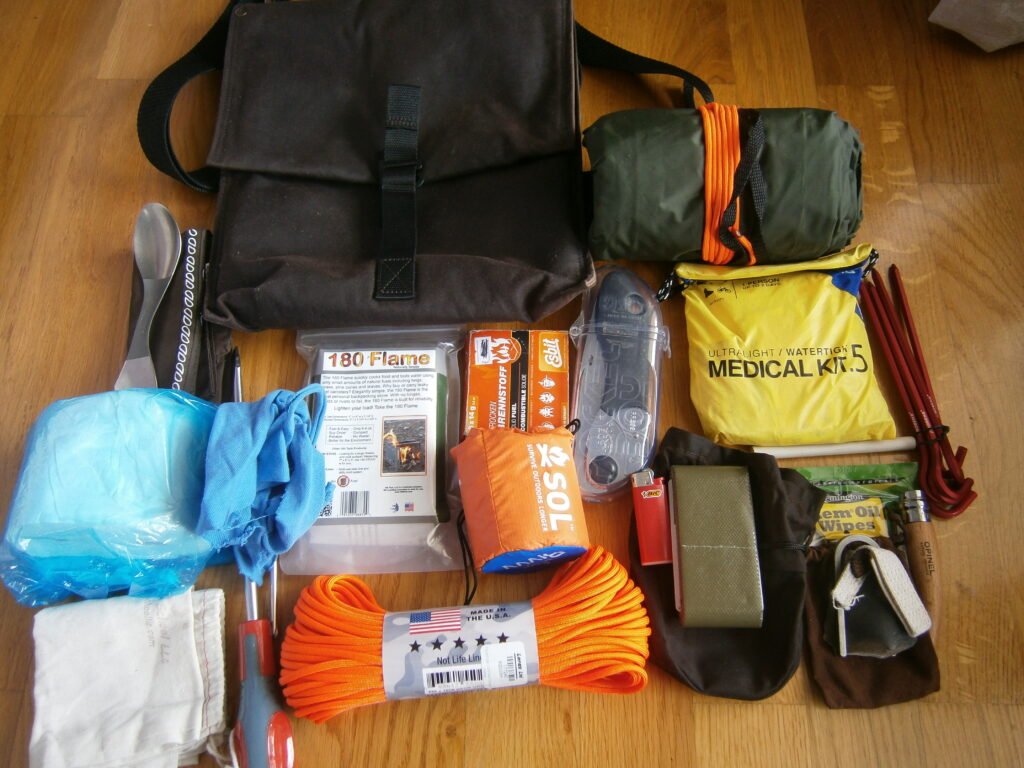
For a normal day in the woods, I keep the load fairly light.
Water
- Stainless steel water bottle or canteen
- Drinking cup
- Water purification tablets
The metal container gives me a way to carry water and the cup can also be used for boiling water.
Fire
- BIC lighter
- Ferrocerium rod or flint and steel
- Tinder
- Small backup fire kit
I like having more than one method of starting a fire.
Shelter
- Lightweight poncho
- Cordage
- A few tent stakes
- Emergency bivvy or emergency blanket
Even on a day trip I like to carry some form of emergency shelter.
Food
- Simple trail food
- Dehydrated meal
- Coffee or tea
- Small cooking utensil
First Aid
- Small first-aid kit
- Bandana
Other Equipment
- Folding saw
- Small survival tin
- Duct tape
- Toilet paper
- Small cloth bag
- Small sharpening tool
This is enough equipment to make a day in the woods considerably more comfortable while keeping the bag relatively light.
Hunting Load
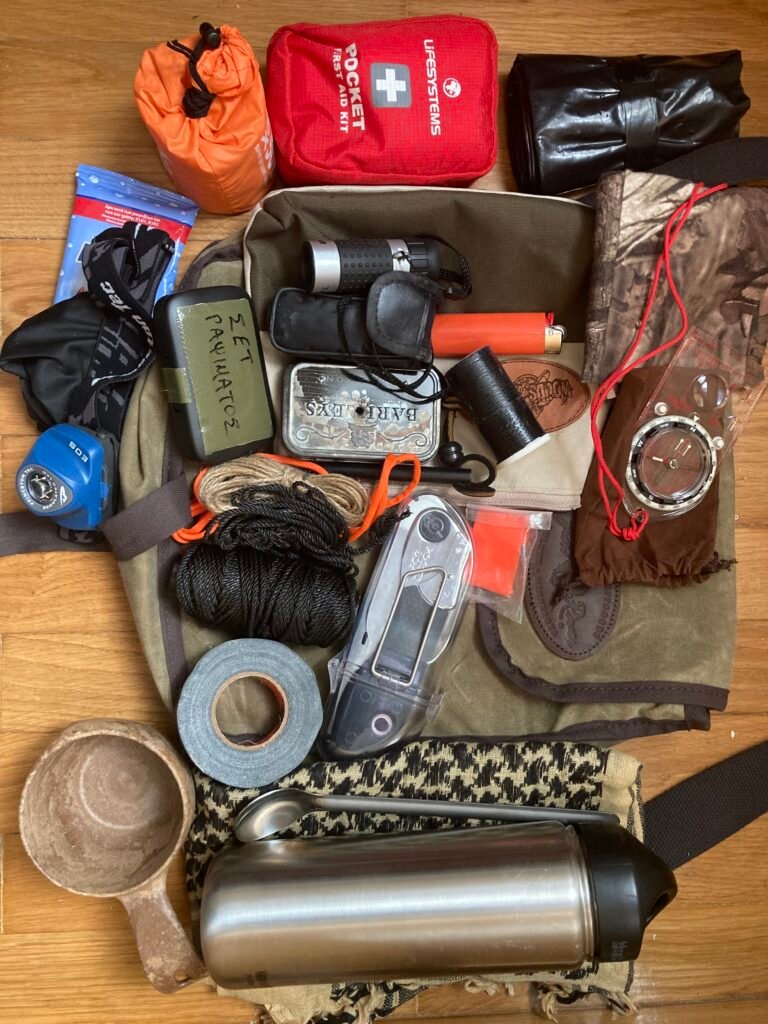
The hunting load is similar to the day-trip load but includes additional equipment.
I normally carry:
- Water bottle and cup
- Food
- Coffee or tea
- Poncho
- Emergency shelter
- Cordage
- Fire kit
- First-aid kit
- Folding saw
- Bandana
- Duct tape
- Toilet paper
- Small survival kit
- Sharpening tool
- Game bags
- Extra ammunition as appropriate
- Hunting-specific equipment
Some equipment is carried separately on the belt or on the firearm rather than in the haversack. You can read a more in depth review here https://www.scrambleroutdoors.com/review-frost-river-grand-marais-mail-bag/
The important thing with a hunting load is to keep the bag organized.
Frequently used equipment should be easy to reach, while emergency equipment can remain deeper in the bag.
The haversack should support the hunt rather than become something else that has to be managed.
Overnight Load
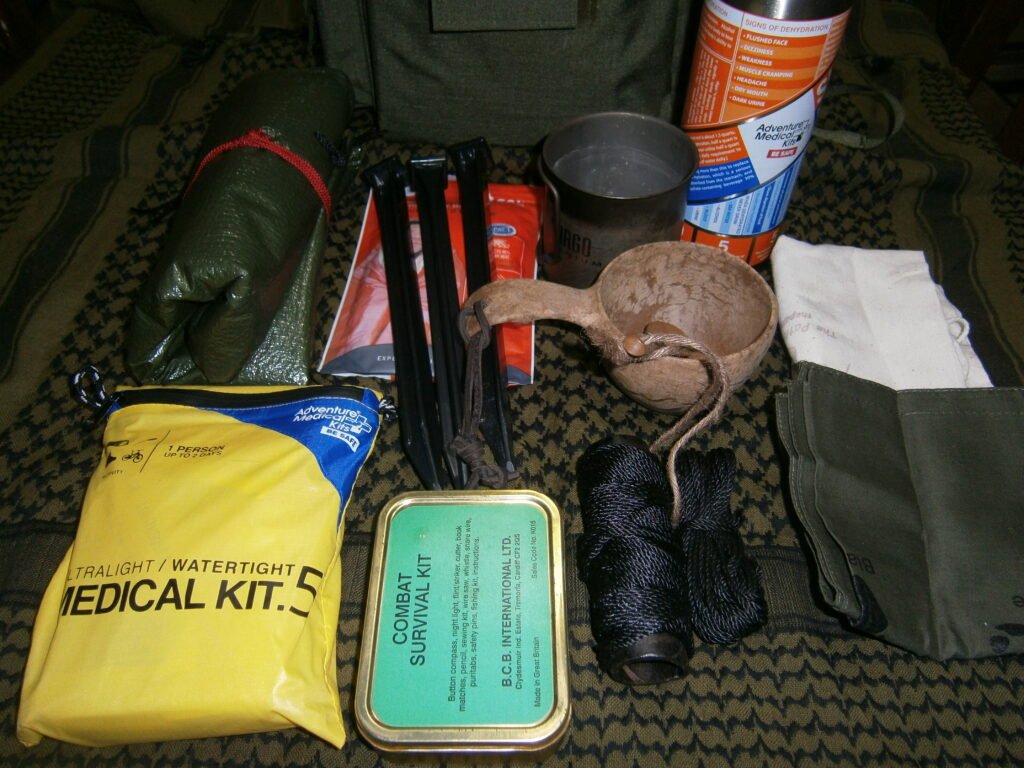
An overnight trip requires a little more equipment.
The biggest difference is shelter, sleeping equipment and food.
For an overnight trip I would add:
- Larger shelter or tarp
- Additional cordage
- Sleeping bag or sleeping quilt
- Sleeping pad
- Additional clothing
- Larger food supply
- Cooking equipment
- Additional water capacity
- More fire-starting material
- Larger first-aid kit
- Personal hygiene items
At this point the haversack begins to approach the practical limit of what can comfortably be carried on one shoulder.
A haversack can be used for an overnight trip, particularly with a minimalist kit, but there is a point where a backpack becomes the better tool.
Haversack vs Backpack
The biggest difference between a haversack and a backpack is the way the load is carried.
A haversack hangs from one shoulder.
A backpack distributes the load between both shoulders and, in larger packs, transfers much of the weight to the hips.
This makes the backpack much better for carrying heavy loads over long distances.
The haversack is better suited to lighter loads and situations where quick access and simplicity are more important.
Haversack
- Simple
- Lightweight
- Easy to access
- Easy to organize
- Traditional appearance
- Good for day trips
- Excellent for short walks and hunting
- Encourages carrying less equipment
Backpack
- Greater capacity
- Better weight distribution
- More comfortable with heavy loads
- Better for long-distance hiking
- Better suited to extended trips
- More room for clothing, food and sleeping equipment
Neither is necessarily better.
They are different tools.
Advantages of a Haversack
Simple
There is very little to go wrong.
A basic haversack is simply a bag, flap and strap.
Easy Access
The contents are generally easier to reach than those in a large backpack.
You can remove the bag, open the flap and have access to the entire main compartment.
Lightweight
The bag itself can be very light, especially when compared with a large framed backpack.
Encourages Minimalism
Limited space forces you to think about what you really need.
This is one of the biggest advantages of the haversack.
Traditional
Canvas and oilcloth haversacks have a classic appearance and fit very well with traditional bushcraft and woods-living equipment.
Versatile
The same bag can be used for hiking, hunting, fishing, bushcraft, camping or simply walking around the woods.
Disadvantages of a Haversack
Uneven Load
The biggest disadvantage is that the entire load is carried on one shoulder.
A heavy haversack can become uncomfortable.
Limited Capacity
There is only so much equipment that can comfortably fit inside a haversack.
This is actually an advantage for a day trip but becomes a disadvantage on longer trips.
Less Comfortable With Heavy Loads
Once the weight increases, a backpack becomes much more comfortable.
Can Swing Around
When walking quickly, climbing or moving through difficult terrain, the bag can move around more than a backpack.
The strap can be adjusted to reduce this problem, but it cannot eliminate it completely.
Limited Organization
Most traditional haversacks have one large compartment rather than multiple specialized pockets.
This means that you have to organize the contents yourself.
Final Thoughts
The haversack is an old design that continues to work because it is simple.
It doesn’t require a complicated suspension system, dozens of pockets or a large amount of equipment.
A good haversack should contain the basic things that allow you to deal with the conditions you are likely to encounter.
For me, that means starting with the 5 Cs:
Cutting Tool, Cover, Combustion, Container and Cordage.
From there I add water, food, first aid and the equipment appropriate for the trip.
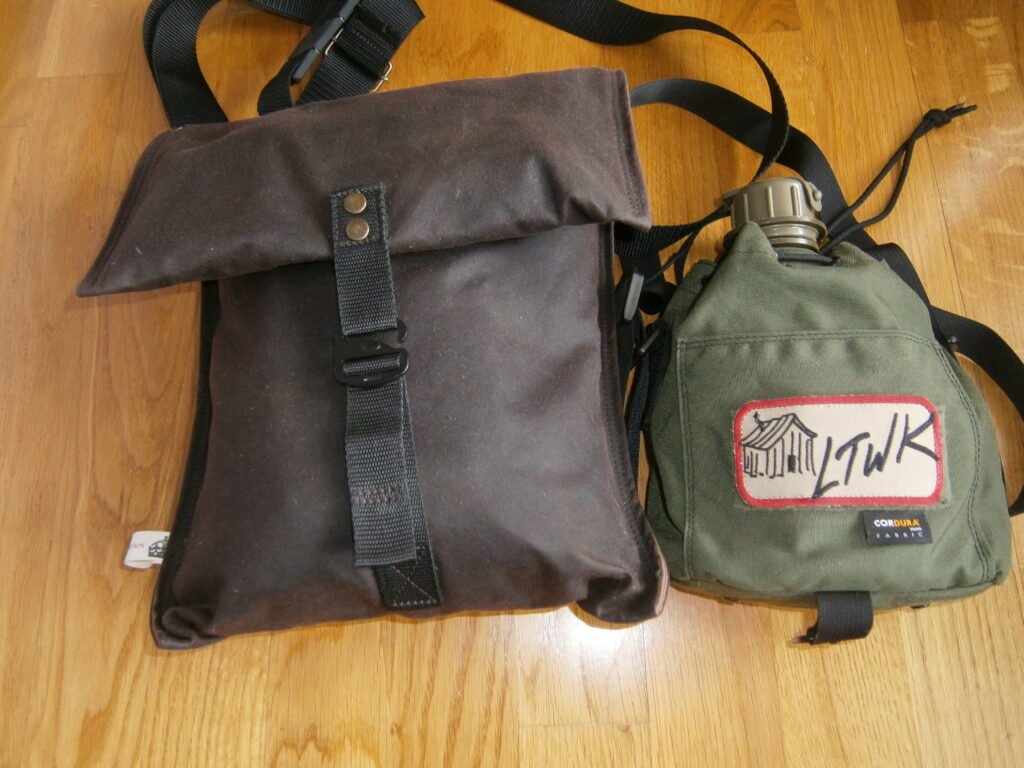
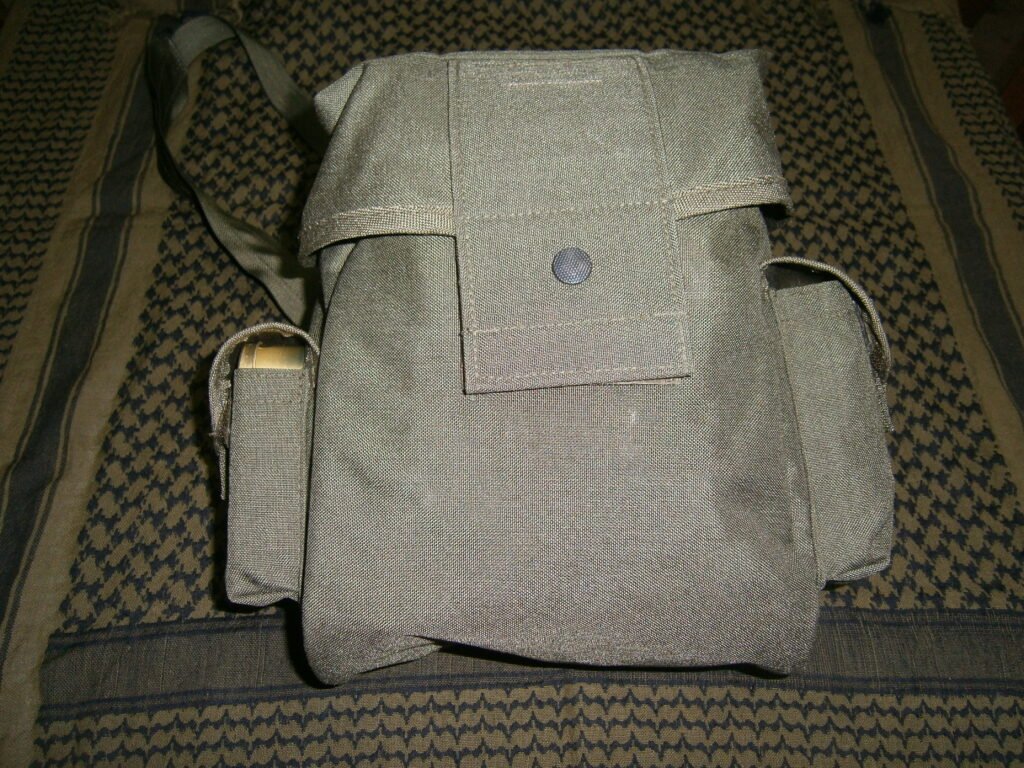
The contents of my haversack have changed over the years. I started with a small military surplus gas-mask pouch because it was inexpensive and compact. Later I moved to an oilcloth and later to a waxed canvas haversack because I wanted more room for day trips and hunting.
The important lesson is that the bag itself isn’t the most important part.
The equipment needs to be useful, reliable and familiar.
Carry less, but know how to use what you carry.
That is what makes the haversack such a useful piece of outdoor equipment.
if you are looking for a new haversack check the following, https://frostriver.com/collections/satchels-haversacks and https://alderstream.wcha.org/bagstotesetc.html