The Timeless Appeal of Cooking Outdoors
Since the discovery of fire, humans have used it to cook food, keep warm, and gather together. People who venture into the wilderness still enjoy these same simple pleasures. Cooking over hot coals can be a deeply rewarding experience. Sitting in front of a fire, gazing at the stars through the tree canopy, creates a feeling of contentment that fills the soul and makes time seem to slow down.
However, an open fire is not always an option. During the summer, fire bans may be in effect, while strong winds and drought conditions can make lighting a fire dangerous. Above the alpine zone, where trees become scarce, finding enough wood to build a fire can also be difficult.
For these reasons, a portable camping stove is an essential piece of equipment for many backpackers. It provides a convenient and reliable way to prepare meals and hot drinks when an open fire is impractical or prohibited.
The Main Types of Backpacking Stove Fuel
Backpacking stoves use several types of fuel, each with its own advantages and disadvantages. The most common options include isobutane-propane canisters, liquid white gas, denatured alcohol, and natural fuels such as wood.
1. Isobutane-Propane Blends (Canister Gas)
Canister stoves are among the most popular choices for general backpacking. They are lightweight, easy to ignite, and require minimal maintenance. The fuel comes in pre-pressurized metal canisters, typically equipped with a standard threaded Lindal valve.
Advantages:
- Lightweight and compact.
- Quick and easy to set up.
- No priming is required.
- Convenient for everyday backpacking trips.
Disadvantages:
- Performance can decrease in cold temperatures as canister pressure drops.
- Fuel canisters may be difficult to find in some remote destinations.
- Empty canisters require appropriate disposal or recycling.
2. White Gas (Liquid Fuel)
White gas is a refined petroleum fuel used in pressurized liquid-fuel stoves. It is particularly useful for cold-weather expeditions, high-altitude trips, and international travel where compatible gas canisters may be difficult to find.
Advantages:
- Performs well in cold conditions.
- Suitable for extended expeditions.
- Fuel availability can be better in some international destinations.
Disadvantages:
- The stove and fuel system are generally heavier and more complicated.
- Manual pressurization is required.
- Priming, or preheating, is often necessary before the stove can operate.
3. Denatured Alcohol and Ethanol
Alcohol stoves are popular among ultralight backpackers and minimalist hikers. Systems such as Trangia use alcohol fuel in a simple burner design, offering a quiet and lightweight cooking solution.
Advantages:
- Simple construction and operation.
- Lightweight systems are possible.
- Quiet operation with few moving parts.
Disadvantages:
- Slower boiling times.
- Performance is sensitive to wind.
- Lower heat output can be a disadvantage in cold weather.
- Spilled alcohol can be difficult to see when burning.
4. Wood and Natural Fuels
Wood-burning backpacking stoves use small pieces of wood, dry twigs, pine cones, or other suitable natural fuels. Some models can also burn wood pellets.
Advantages:
- No need to carry conventional fuel when suitable natural fuel is available.
- Can reduce the weight of fuel carried on longer trips.
- Offers a traditional outdoor cooking experience.
Disadvantages:
- Performance depends on the availability and dryness of natural fuel.
- Wet conditions can make collecting and burning wood difficult.
- Fire restrictions may prohibit their use, even when conventional canister stoves are permitted.
Primus Essential Trail Stove: Basic Characteristics
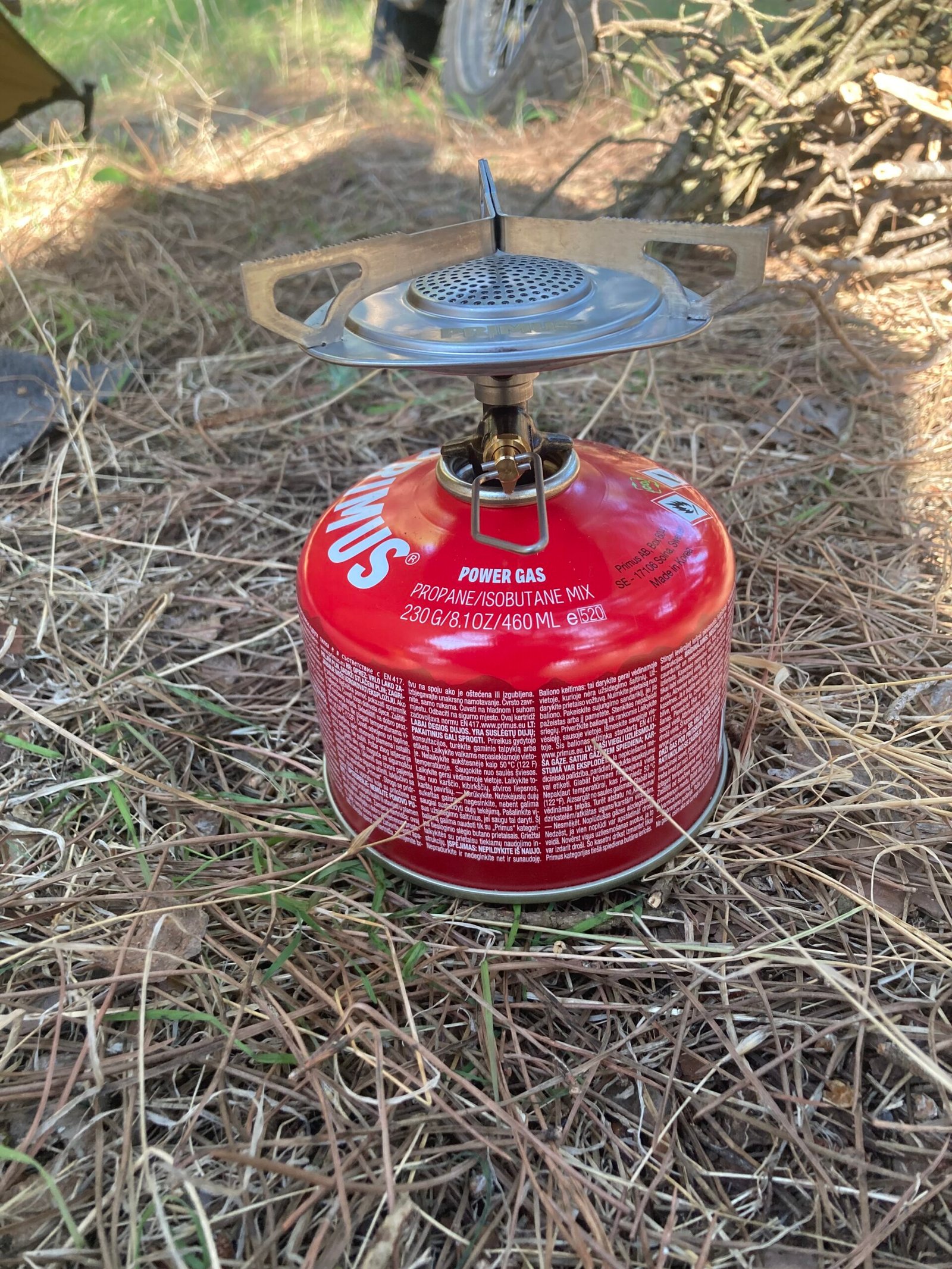
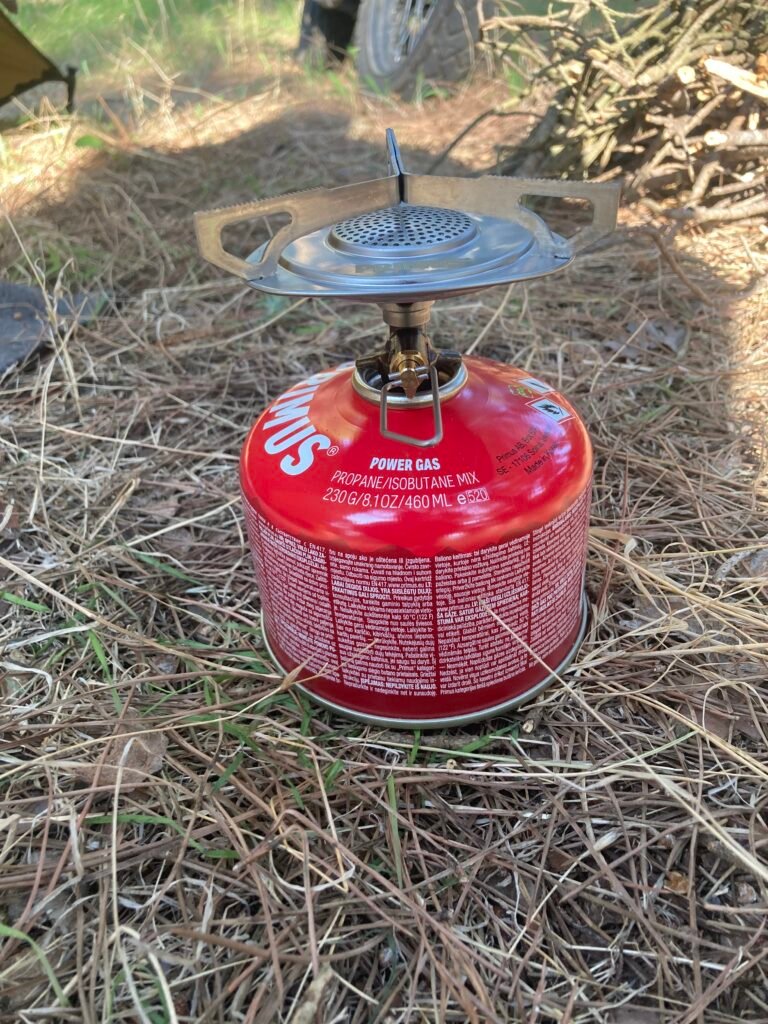
I chose the Primus Essential Trail Stove because it is lightweight, simple, and ready to use. For backpacking, I appreciate equipment that does its job without unnecessary complexity.
The stove is constructed from stainless steel and weighs approximately 114 grams, making it a practical choice for hikers who want to keep their pack weight down.
Its main specifications are:
- Weight: 114 g
- Height: 60 mm
- Diameter: 108 mm
- Depth: 90 mm
- Maximum output: 2,500 W
- Fuel consumption: 180 g per hour at maximum output
- Manufacturer-stated boiling time: 3 minutes 30 seconds for 1 liter of water
The stove features integrated wind-protective pot supports and can accommodate a variety of pots and pans. Its compact design makes it easy to pack and carry on hiking and camping trips.
One important detail to clarify its canister compatibility. The standard Essential Trail Stove is designed for threaded gas canisters with a Lindal valve. Compatibility with non-threaded canisters depends on the specific model and whether a suitable adapter is approved for use.The particular stove that I have is the Essential Trail Duo,that can accept both types.
According to the stated fuel consumption, a 230 g canister would provide approximately 77 minutes of continuous operation at maximum output. Actual performance will vary depending on conditions and how the stove is used.
Real-World Fuel Consumption Estimates
How long will a 230 g canister last in the field? The answer depends on the amount of water you boil, the meals you prepare, the weather, and the power setting you use.
Boiling Water
Based on the manufacturer’s stated boiling time of 3 minutes 30 seconds per liter, a 230 g canister could theoretically provide around 20–22 one-liter boils under favorable conditions.
However, this is an estimate rather than a guaranteed result. Wind, low temperatures, water temperature, pot design, and burner efficiency all affect fuel consumption.
Solo Backpacking Trips
When traveling alone, you will often need to boil between 0.5 and 1 liter of water for coffee, tea, or freeze-dried meals. If you prepare two hot drinks or meals per day, a single 230 g canister may last approximately five to seven days, depending on your routine and cooking conditions.
For a lightweight solo backpacking setup, this makes the Essential Trail Stove a practical option for weekend trips and potentially longer journeys.
Cooking for Two People
A 230 g canister can also be sufficient for a weekend camping trip with two people, especially if you use the stove efficiently.
Preparing meals such as pasta, fried eggs, bacon, and other simple dishes requires more fuel than merely boiling water. Simmering food for several minutes or repeatedly heating a pan can significantly increase consumption.
For a typical weekend, one canister may be enough, but fuel requirements depend on the menu, cooking time, and weather. If you want extra peace of mind, carrying a second canister is a sensible precaution.
Tips for Maximizing Fuel Efficiency
A few simple techniques can help you get more cooking time from every canister.
1. Turn the Flame Down Slightly
Running the stove at a moderate setting instead of maximum output can reduce fuel consumption. The water may take a little longer to boil, but the additional time can be worthwhile if it results in lower overall fuel use.
The most efficient setting depends on the pot, the weather, and the food being prepared.
2. Use a Pot Lid
Keeping a lid on your pot helps retain heat and reduces heat loss. This can shorten cooking times and save fuel, particularly when boiling water.
3. Protect Your Cooking Area from the Wind
The Essential Trail Stove has integrated wind-protective pot supports, but these do not completely shield the flame from strong gusts. Wind can increase cooking times and fuel consumption.
Whenever possible, choose a naturally sheltered cooking spot. Avoid using a gas stove inside a tent or enclosed shelter because of the risk of carbon monoxide poisoning and fire. Also, avoid adding a close-fitting aftermarket windscreen around a canister stove, as trapped heat can dangerously overheat the fuel canister.
4. Plan Your Meals
Choose meals that require little cooking time and avoid unnecessarily boiling more water than you need. If you are preparing several dishes, planning the order in which you cook them can also reduce repeated heating.
My Experience with the Primus Essential Trail Stove
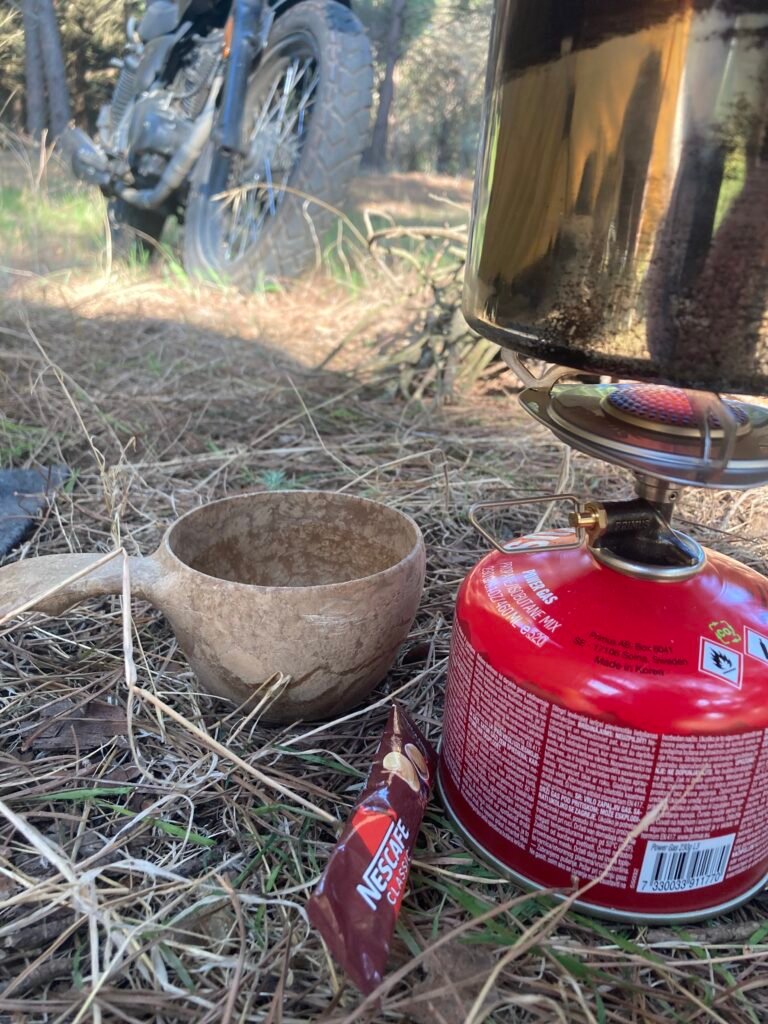
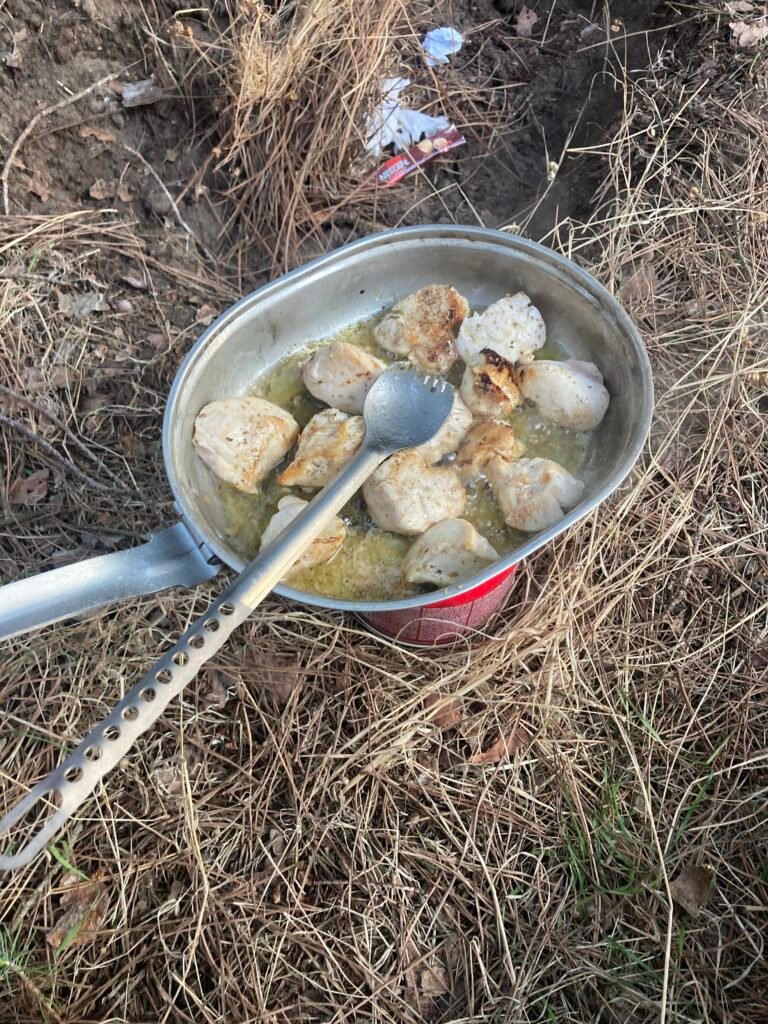
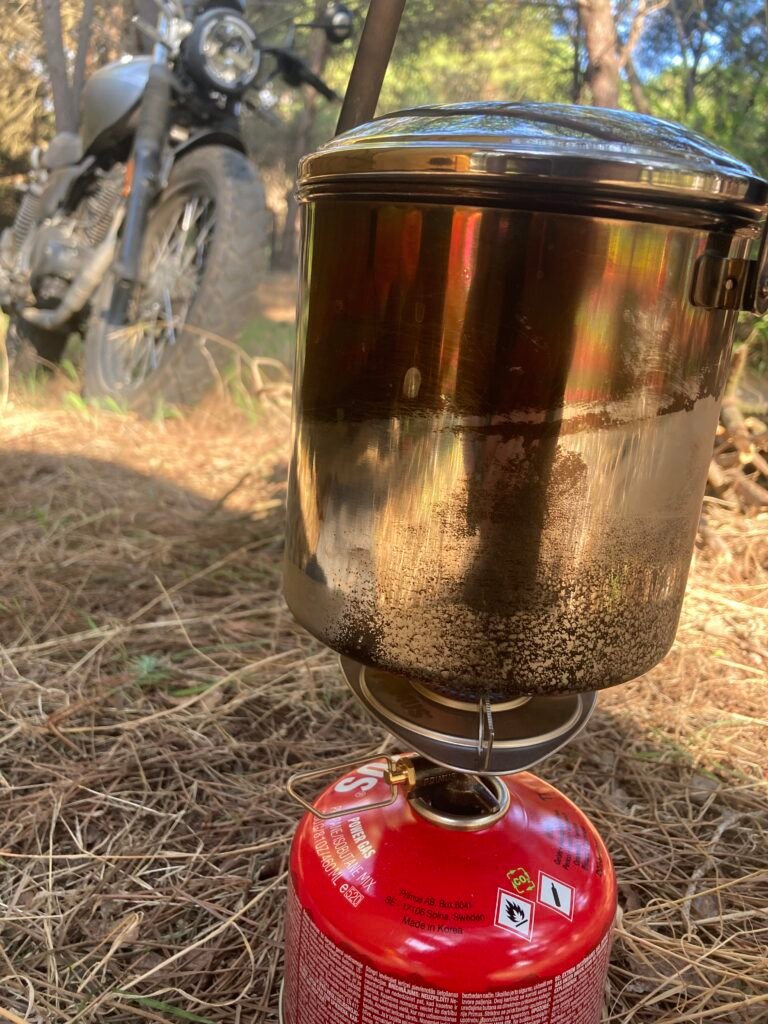
During my last camping trip, https://www.scrambleroutdoors.com/category/riding/ I finally had the opportunity to put the Primus Essential Trail Stove to practical use. I found it very easy to operate, which is exactly what I want from a backpacking stove.
I used it to make coffee and cook chicken in my frying pan. I did not need to run the stove at maximum output, and it handled both tasks without any difficulty.
Based on this experience, I am confident that the stove is an excellent option for solo weekend camping. It is lightweight, straightforward to use, and capable of handling the everyday cooking tasks that most backpackers need.
For someone who wants to enjoy a hot coffee in the morning and prepare a proper meal at the end of a long day on the trail, the Essential Trail Stove offers a practical balance of simplicity, weight, and performance.
Final Thoughts
An open fire will always have a special place in the outdoor experience. Nevertheless, there are times when a portable stove is the more practical, responsible, and convenient choice.
The Primus Essential Trail Stove is a straightforward piece of equipment that does what it is designed to do. Its low weight, simple operation, and useful heat output make it well suited to solo backpacking and weekend camping trips.
For my needs, it has proved to be a reliable companion in the outdoors. Sometimes, all you need after a long day of hiking is a hot cup of coffee, a freshly cooked meal, and a quiet evening beneath the stars.
